- Empty cart.
- Continue Shopping

- Home /
- Page
Acknowledgement
A note of thanks from the Chief Content & Layout Editor of Alphabetic African Timeline — The Essential & Complete e-Guide to the African Countries, Peoples and Politics.
I would particularly like to thank the following agencies and personalities for their help and advice on this project. I am very grateful to all of them for their outpouring support, and I gratefully acknowledge the technical assistance given in the preparation of this hyper volume.
I wish, however, to specifically mention the assistance and encouragement given to me by the secretariat of the ex-Organization of African Unity (OAU) and the Interim African Union Commission (IAUC) that followed it; the external affairs ministries of African states; and the embassies and heads of diplomatic missions of the African governments based in Addis Ababa, the Ethiopian capital and the chartered seat of the African Union. Their cooperation and understanding during my correspondence and my door-to-door approach to gathering resource materials for this eVersion was appreciated.
A special word of thanks is given to Ambassador Daniel Antonio (Mozambique), ex-Deputy Interim Commissioner for HRS, Technology & Conferences, and to the late Dr. Negasso Gidada Solon, ex-Minister of Information of the Transitional Government of Ethiopia (1992–1995) and later President of the FDRE (1995–2001).
I equally appreciate the support of Dr. Dagash Ibrahim Dagash (Sudan), Mr. Justin Bright Thundu (Malawi) and Mr. Desmond Thomas Orjiako (Nigeria) of the Press and Information Department of the ex-OAU and AU Interim Commission, without whose voluntary support this hyper-content would have remained a dream.
And many thanks to the United Nations Economic Commission for Africa (UNECA) and the Ethiopian National Meteorological Services Agency (ENMSA) for their good offices, which allowed their library facilities to be used freely for over three years.
I also thank the late Hon. Mebaa-Selassie Alemu, once the Press Secretary of His Majesty the late ex-Emperor of Ethiopia, for his invaluable advice and guidance; and my good friend the late Mr. Wolfgang Anton Mach, an economist and development expert, for his supply of updated economic data.
I would like to extend my sincere thanks and gratitude to my fellow African friends and countrymen, who lent me clear advice and material assistance, believed it to be a noble purpose, and helped me towards my achievement on this hyper-content in many ways.
My thanks also go to the eGovernment of Ethiopia, namely the Federal Ministry of Innovation & Technology (MinT), for their energetic support.
With Special Thanks To
- Mr. Kinfe HaileMariam — senior expert at the National Meteorological Services Agency (NMSA)
- Retired Flight Colonel Alemayehu Haddis (the late)
- Mr. Woldie Nidaw — former senior expert at the ex-Ministry of Transport and Communication (MoTaC)
- Mr. Wubeshet Demeke — former head of Geographic Information System (GIS), Ethiopian Water Resources Development Authority (EWRDA)
- Mr. Geta Makonnen — Owner & Managing Director of Tewanney Design & Graphics Studio, Addis Ababa, Ethiopia
- Saeed Ahmed Mahmoud — a Somali journalist known as SAM, who currently lives in Hargeisa, the capital of Somaliland
Without their encouragement and faith, this hyper-text might have remained just another Aries dream. I would like to praise them thankfully once again for the clear advice that helped us achieve a positive outcome.
Of course, as a person who is not easily provoked, I have to speak out here once again: I was repeatedly interrupted with insults of different kinds during my door-to-door approach to the embassies and head missions of the African governments based in Addis Ababa while gathering resource materials for this hyper-version. Citizens require and want to know more about the African continent as a whole, and to make a difference.
As Chief Content & Layout Editor of this eVersion, I wrote these country profiles in my personal capacity, and the views expressed here should not be attributed in any way to my colleagues. None of the people named above should be held responsible for any of this version’s failings which, along with the views expressed in it, are entirely my own.
Reasonable backing has of course been provided by the editorial advisory team to ensure the correctness of facts and figures. It was a noble start with a blessed end from where I stand, and let us hope that these timeline news updates and diary analyses serve you well. Thank you so much for your never-ending assistance.
We count on your continued support.
Moges Mulugeta Amharay (Peace-Laureate)
Chief Content & Layout Editor
About the Chief Content & Layout Editor
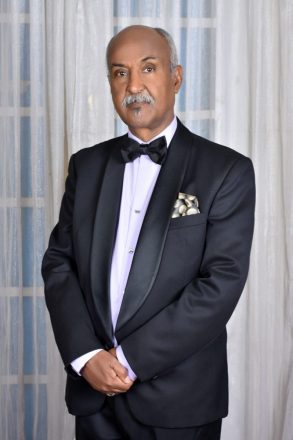
Moges Mulugeta Amharay (Peace-Laureate) writes for various editorials. He is a polished and professional customer service representative with proven customer support experience and the ability to build productive relationships, resolve complex issues and win the loyalty of e-Customer readers.
Moges Mulugeta, also known as “Blatta”, interviewed a number of career African diplomats and press councillors of the African governments residing in Addis Ababa, the chartered seat of the African Union Commission, during a door-to-door approach to gathering resource materials. The work sets out the interlinked history of almost all of Africa’s 55 independent nation states and fourteen dependency islands and islets in the A to Z (ALGERIA–ZIMBABWE) volume, whose member states largely share a common sense of economic development and social identity.
As a schoolboy, Moges was fond of storytelling, and later in life he proved himself a competent part-time writer of historic, geographic and public diary articles. A former classmate and close friend has described him as “modest and talented, and an extremely capable man to compile such an eVersion”.
Though inspired by a pan-African sense, he has developed himself further through reading, overseas correspondence, healthy discussion and friendly debate on pre-independence and post-colonial African history and current affairs — pursuits that remain among his hobbies to this day. A born optimist, he is oriented towards public-spirited activity and believes that “a man should do something good for the general public during his lifetime”.
Mr. Moges Mulugeta was honoured for his global peace activities by the Universal Peace Federation (UPF) and the Inter-religious and International Federation for World Peace (IIFWP), based in Seoul, Republic of Korea, at a ceremony held in the Congress Hall of Addis Ababa in October 2006. He was nominated and selected for this honour on the basis of his firm dedication to peace and to civil and democratic rights in his native country, and his outstanding contributions to African studies.
The “Ambassadors for Peace” title of the UPF and IIFWP designates a global network of leaders from religion, politics, the mass media, academia and civil society working cooperatively for the sake of world peace. The title is given to individuals whose lives exemplify the ideal of living for the sake of others, and who dedicate themselves to universal moral values, strong family life, inter-religious cooperation, international harmony, renewal of the United Nations, a responsible public media and the establishment of a culture of peace. The initiative was launched in January 2001 in Seoul, and has since given rise to a series of educational programmes aimed at reconciliation and peace. Nearly 70,000 Ambassadors for Peace have been appointed worldwide.
During the May 2005 national election, Mr. Moges campaigned for the country’s pro-democracy party, the Coalition for Unity and Democracy (CUD), which achieved a sweeping victory in the capital, Addis Ababa, in the national and parliamentary elections. To his dismay, the results were overturned and protests broke out amid allegations of fraud, after which the ruling EPRDF began cracking down on the opposition CUD and its supporters. The European election observers led by the Hon. MEP Ana Maria Gomes reported extensive human-rights violations in the months that followed, with 193 peaceful demonstrators killed, some 763 injured and tens of thousands imprisoned by police and security forces. Moges escaped arrest and moved to the countryside, but his connections to opposition political groups subjected him to continued threats, harassment and intimidation long after the election.
Mr. Mulugeta studied academic education courses, majoring in African history. In recent years he has spent much of his time studying ethnography and rewriting African socio-cultural subjects — history, language, culture and literature. The Complete & Comprehensive Guide to the African Countries, Peoples and Politics presents some of his dedicated work to promote the entire continent: finding interesting traditional beliefs, recording inspiring events, discovering African heritage, corresponding with Africans and non-Africans alike, travelling around the continent and meeting personalities across the diaspora.
Despite Ethiopia being the chartered seat of the OAU and now the official seat of the African Union Commission (AUC), in his view the incumbent anti-press regime in Ethiopia never allowed even the minimum space for the all-inclusive political dialogue and reconciliation that has given the citizens of many African nations political wellbeing, stability and tranquility.
Moges therefore self-exiled in the Scandinavian Kingdom of Norway for about a decade, where he studied Norwegian language (Norskkurs) and social science (Norge Samfunnsfag) from his arrival on 3 July 2007 until he left the kingdom voluntarily on 9 June 2017.
The writer can be reached on social media: Facebook, X (Twitter) and LinkedIn.
Copyright Notice
Documents in this collection that were prepared by diarists, writers and historians as part of their official duties are in the public domain. Some of the archival materials in this collection may be subject to copyright or other intellectual property restrictions. Users of these materials are advised to determine the copyright status of any document from which they wish to publish or republish.
The copyright law of Ethiopia governs the making of photocopies or other reproductions of copyrighted material. Under certain conditions specified in the law, public libraries and archives are authorised to furnish a photocopy or other reproduction. One of these specified conditions is that the photocopy or reproduction is not to be used for any purpose other than private study, scholarship or research. If a user makes a request for, or later uses, a photocopy or reproduction for purposes in excess of fair use, that user may be liable for copyright infringement.
This institution, ALPHABETIC AFRICAN TIMELINE, reserves the right to refuse to accept a copying order if, in its judgment, fulfilment of the order would involve violation of Ethiopian copyright law. The copyright law of Ethiopia extends its protection to unpublished works from the moment of creation in a tangible form.